
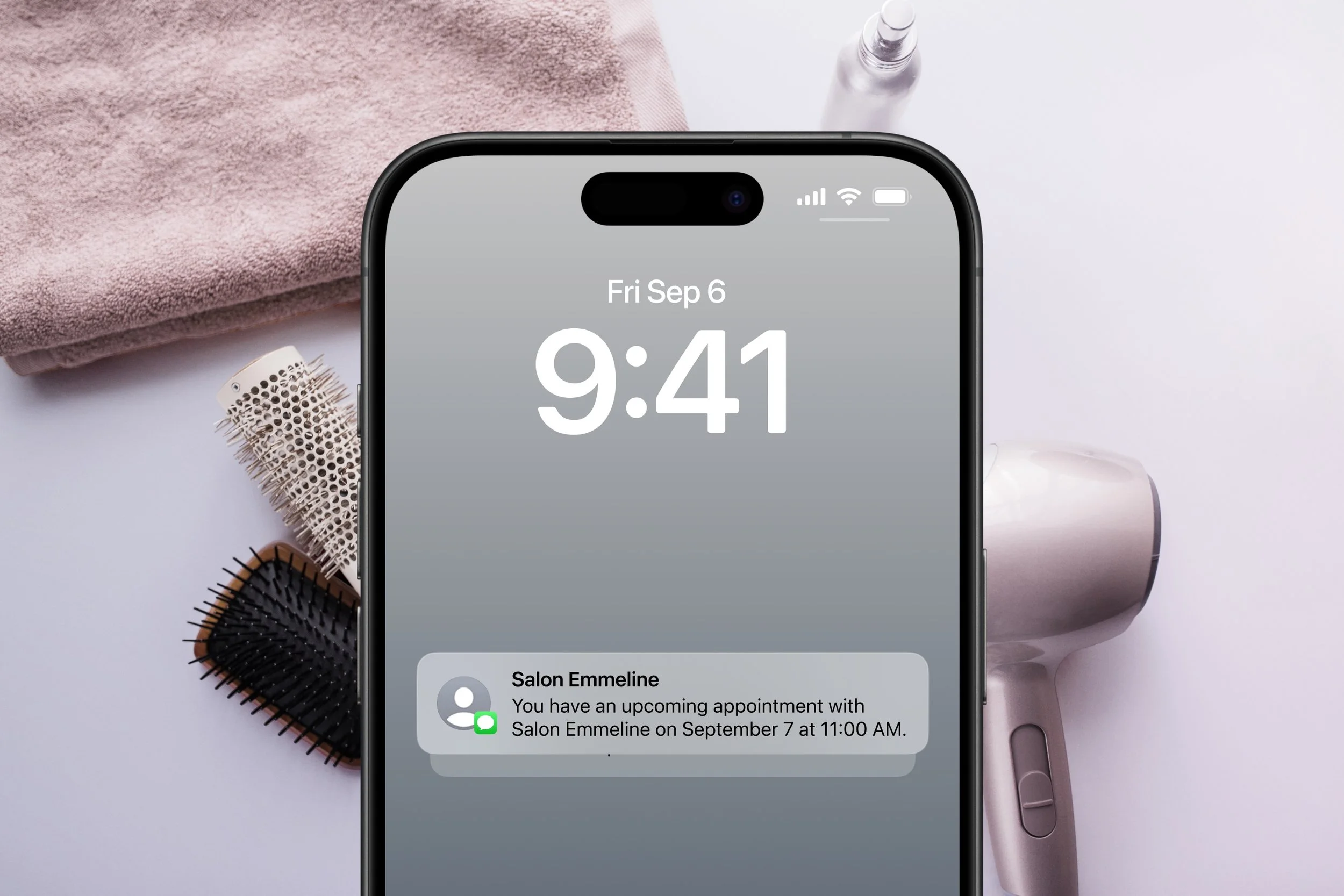
Should You Require Confirmation for Appointments?
If you run an appointment-based business, missed appointments are probably one of your biggest frustrations. Over time, many business owners ask the same question:
Should you require clients to confirm their appointments?
At first glance, confirmation might feel unnecessary or even risky. You may worry about adding friction, annoying clients, or increasing cancellations.
In reality, requiring confirmation is often one of the simplest and most effective ways to reduce missed appointments, when it is done correctly.
What Does Appointment Confirmation Actually Mean?
Appointment confirmation means asking the client to actively acknowledge their upcoming appointment.
This can be done by:
clicking a confirmation link
replying YES to an SMS
tapping a button in an email or app
The key difference is simple:
Without confirmation, the appointment exists only in your system.
With confirmation, the appointment exists in the client’s mind.
Why Unconfirmed Appointments Are Risky
When appointments are booked days or weeks in advance, commitment fades.
Clients forget. Priorities change. Life gets in the way.
If no confirmation is required:
clients may assume the appointment is flexible
forgetting feels consequence-free
canceling feels optional rather than expected
This is one of the main reasons why unconfirmed appointments turn into no-shows.
How Confirmation Reduces Missed Appointments
Requiring confirmation creates a small but powerful psychological shift.
It increases commitment
When a client confirms, they are making a conscious decision.
That small action significantly increases the likelihood they will show up.
It brings the appointment back into awareness
Confirmation messages remind clients of the time, date, and details.
This alone prevents a large percentage of missed appointments caused by simple forgetfulness.
It filters out low-commitment bookings
Some clients book casually.
If they never confirm, you learn that early, not at appointment time.
This allows you to:
follow up
offer the slot to someone else
adjust your schedule
Will Requiring Confirmation Increase Cancellations?
Yes, sometimes it will.
But this is not a bad thing.
A confirmed cancellation is almost always better than an unannounced no-show.
Cancellations give you:
time to react
time to rebook the slot
better data for planning
No-shows give you nothing.
When Confirmation Makes the Biggest Difference
Confirmation is especially valuable when:
appointments are booked far in advance
time slots are high-value
preparation is required
rescheduling is difficult
Medical clinics, salons, consultants, and repair services all fall into this category.
How to Require Confirmation Without Annoying Clients
The problem is not confirmation itself.
The problem is how it is implemented.
Keep it simple
One click. One reply. No forms. No phone calls.
If confirmation takes more than a few seconds, clients will ignore it.
Be clear and polite
Explain why you are asking for confirmation.
For example:
“This time is reserved especially for you. Please confirm so we can plan our schedule properly.”
This sets expectations without sounding aggressive.
Combine confirmation with reminders
Confirmation works best when paired with reminders.
A common approach:
reminder with confirmation request 24 to 48 hours before
short reminder on the day of the appointment
What to Do If a Client Does Not Confirm
Lack of confirmation is valuable information.
If a client does not confirm:
send one follow-up reminder
allow easy cancellation or rescheduling
consider releasing the slot if there is no response
This protects your schedule without confrontation.
Final Thoughts
Requiring confirmation is not about control.
It is about clarity.
Clear expectations lead to fewer surprises, fewer missed appointments, and less stress.
When implemented thoughtfully, appointment confirmation improves attendance, communication, and overall professionalism.
For many appointment-based businesses, it is one of the highest-impact changes they can make with minimal effort.